
Waking Up the Garden: A Maine Mud Season Survival Guide
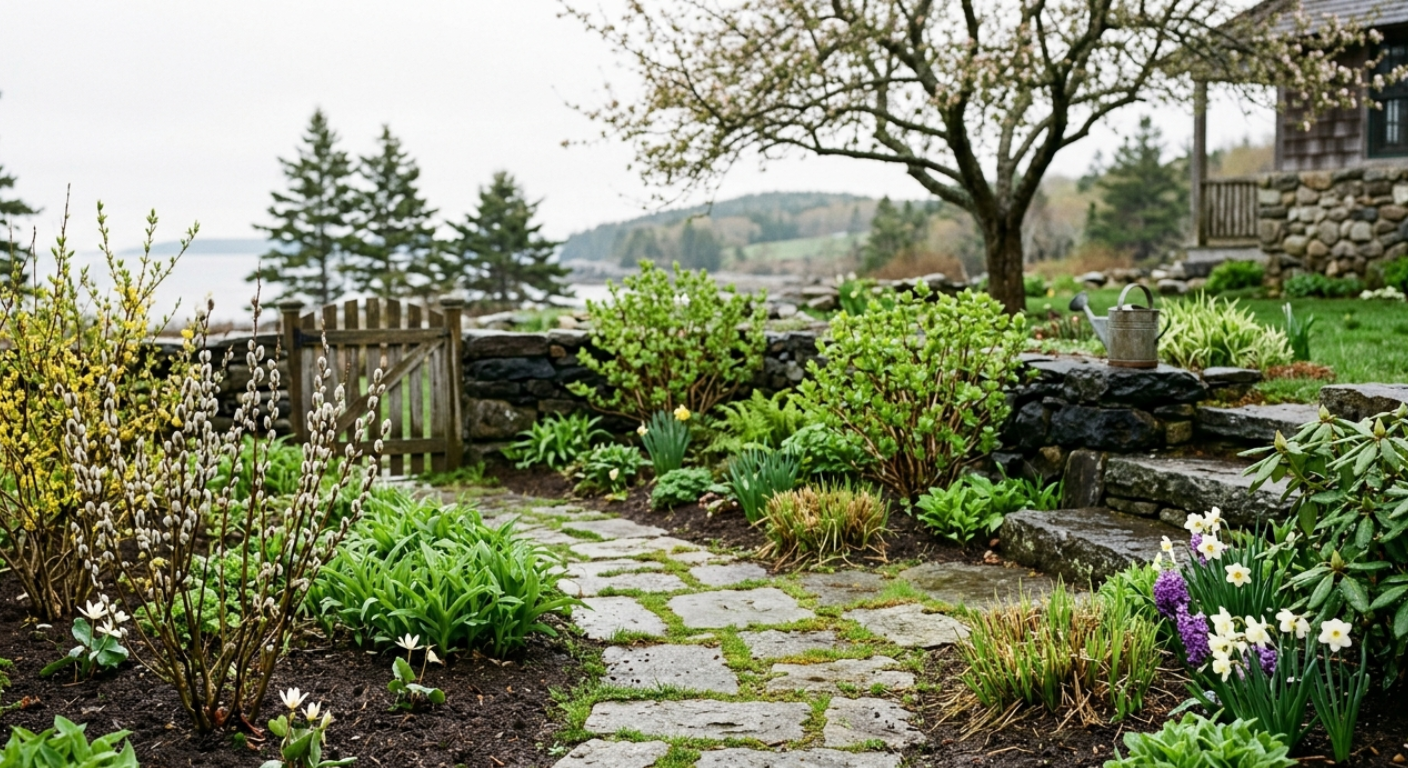
In Maine, we don’t just have four seasons; we have Mud Season. It’s that unpredictable window where the snow has finally retreated, but the landscape is left looking weathered and raw.
While it’s tempting to start digging as soon as the frost breaks, a strategic approach to spring landscaping is vital. The work performed during the thaw sets the stage for the health and vibrancy of the property all summer long. Here is the professional guide to navigating the transition.
1. The Physics of Soil: Avoiding Compaction
The most critical rule of early spring is often the hardest to follow: Stay off the soft ground. Saturated soil is incredibly vulnerable to structural damage.
The Risk: Walking or moving heavy equipment over "spongy" turf suffocates root systems and creates drainage ruts that can persist for years.
The Field Test: If the ground gives way under your boots or leaves a visible print, it is too wet to work.
The Tarp Strategy: When moving debris, utilize heavy-duty garden tarps rather than wheelbarrows. A tarp distributes weight across a larger surface area, preventing the narrow-tire ruts that plague spring lawns.
2. Structural Inspection: Assessing Winter Hardscape Damage
Before the greenery takes over, it is time to inspect the "bones" of the property. The freeze-thaw cycle is notorious for shifting even the most expertly laid stone.
Identifying Frost Heaves: Inspect stone walls, terraces, and walkways for shifting. Catching a minor heave early allows for a surgical fix before it becomes a structural failure.
Salt and Sediment Removal: Sweep away residual road salt and winter grit. These leftovers aren't just an eyesore; they can aggressively alter soil pH and scorch emerging perennials.
Joint Integrity: Examine the polymeric sand or stone dust in your masonry joints. If winter runoff has washed out the binding material, it’s time for a refresh to prevent weed infiltration and stone movement.
3. Advanced Plant Care: Pruning and Preservation
Proper spring maintenance is about knowing when not to cut. Timing your pruning ensures you aren't removing this year's floral display.
The "Wait and See" List: Do not prune spring-blooming favorites like Lilacs, Forsythia, or Hydrangeas yet. They bloom on "old wood," and pruning now will delete your spring color.
The "Cut Back" List: Now is the time for Ornamental Grasses and Panicled Hydrangeas (like Limelight). Cut them back to 3–5 inches to encourage robust new growth.
The Scratch Test: Use a fingernail to lightly scratch a small twig. Green underneath indicates life; brittle and brown indicates winter kill.
4. Solving Drainage and "Snow Mold"
Standing water that lingers for more than 48 hours is a sign of a drainage issue that needs a long-term fix.
Aeration: Use a tine rake to "fluff" matted grass. This breaks up Snow Mold (grey or pink fuzzy patches), allowing oxygen and sunlight to reach the soil surface.
Bio-Retention: Consider a Rain Garden for low spots. Utilizing water-loving native plants like Red-Osier Dogwood or Clethra (Sweet Pepperbush) can naturally manage excess groundwater while adding a high-end focal point.
5. The Professional Spring Toolkit
To achieve a clean, Little Lion finish, ensure your kit includes:
Solid Steel Edging Spade: Essential for creating the deep, vertical "V" edges that define professional garden beds.
Bypass Pruners: Scissor-style blades are a must for clean cuts that heal rapidly and resist disease.
Spring Tine Rake: For "fluffing" turf without damaging dormant roots.
Plan Your 2026 Landscape Season
The window for high-end landscape construction is shorter than most realize. Whether you are envisioning a reclaimed granite terrace or a complete ecological garden redesign, early planning is the only way to ensure a slot in the prime planting window.
Little Lion Landscape Design specializes in reliable, intentional landscapes designed to stand the test of time.
Next Week: The Best Native Maine Plants for Low-Maintenance Beauty.
〰️
Next Week: The Best Native Maine Plants for Low-Maintenance Beauty. 〰️